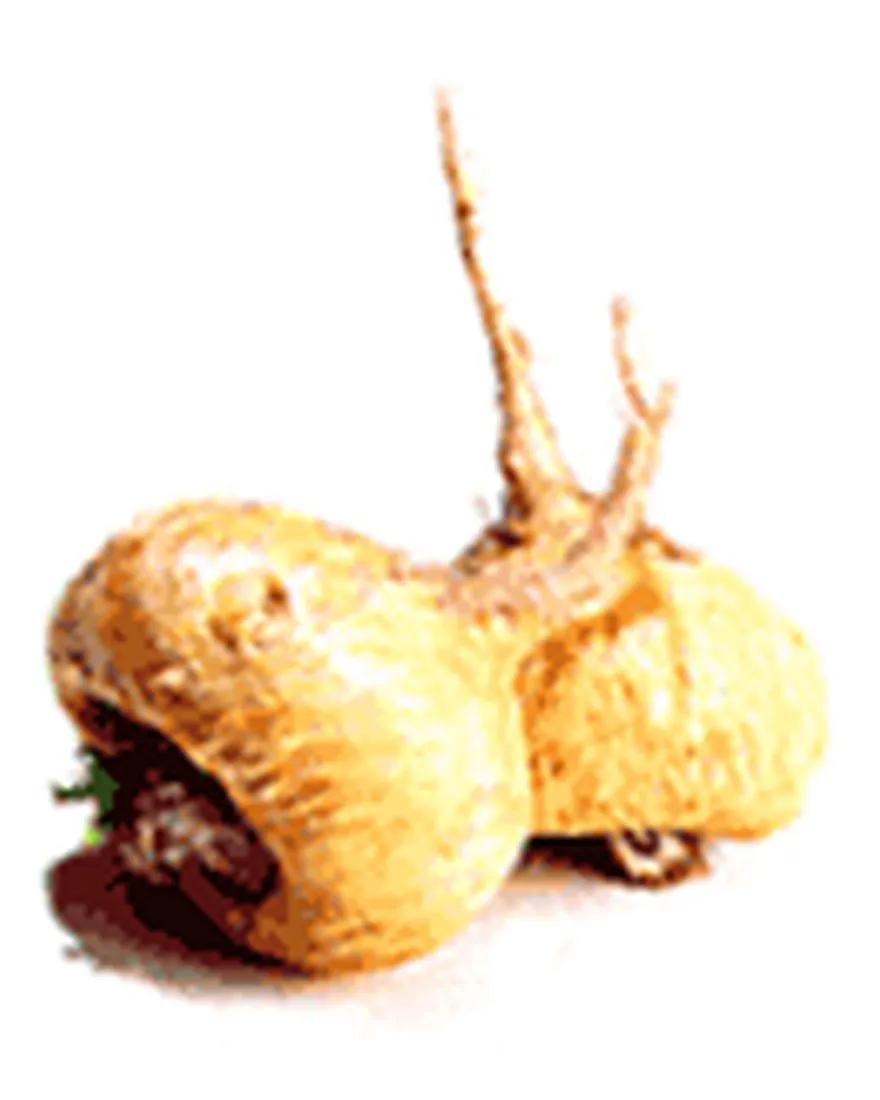
Lepidium meyenii, better known simply as maca — a knobby root vegetable, cousin to the radish, that grows where almost nothing else will: the wind-scoured plateau above 4,000 metres in the Peruvian Andes. Ours comes from the Junín plateau and is gelatinized, a gentle heat process that breaks down the raw starch and makes the root easier on stomachs that find the unprocessed powder heavy. The result is a warm, malty powder with a flavor not unlike butterscotch or caramelized milk.
Andean farmers have cultivated maca for some two thousand years, high enough that little else could be grown for food, and it became both a staple crop and a tonic reserved for those doing the hardest physical work — herders, porters, soldiers sent to the altiplano. Spanish chroniclers noted the crop within decades of arriving and remarked on how highly the local population prized it.
A teaspoon stirred into a morning smoothie, porridge, or a mug of warm milk — the malty flavor sits better against something creamy or sweet than against water alone.
Maca is traditionally valued to support natural energy, stamina, and hormonal balance, a food as much as a supplement in the regions where it is grown. This product is not intended to diagnose, treat, cure, or prevent any disease and is no substitute for medical advice.
Story preview
Tap to flip through the cover, snippets, and details.

 Maca Root Vitality Powder