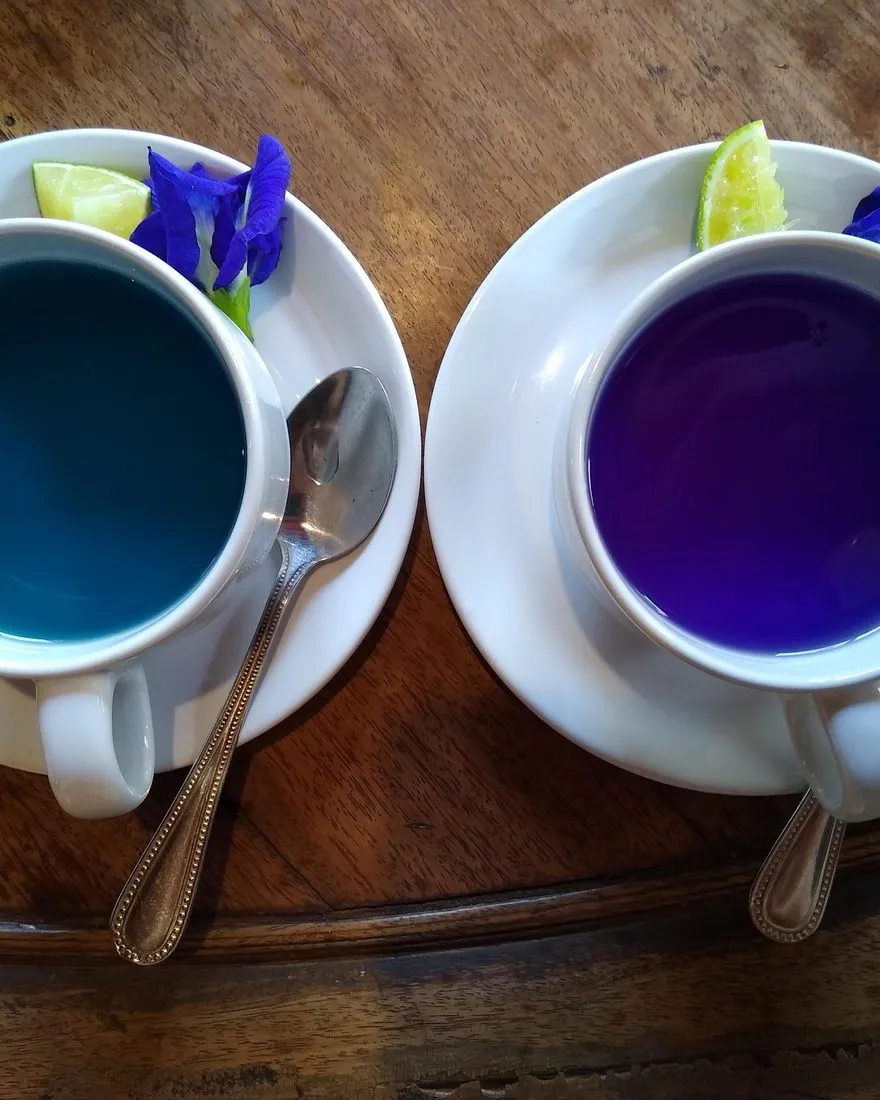
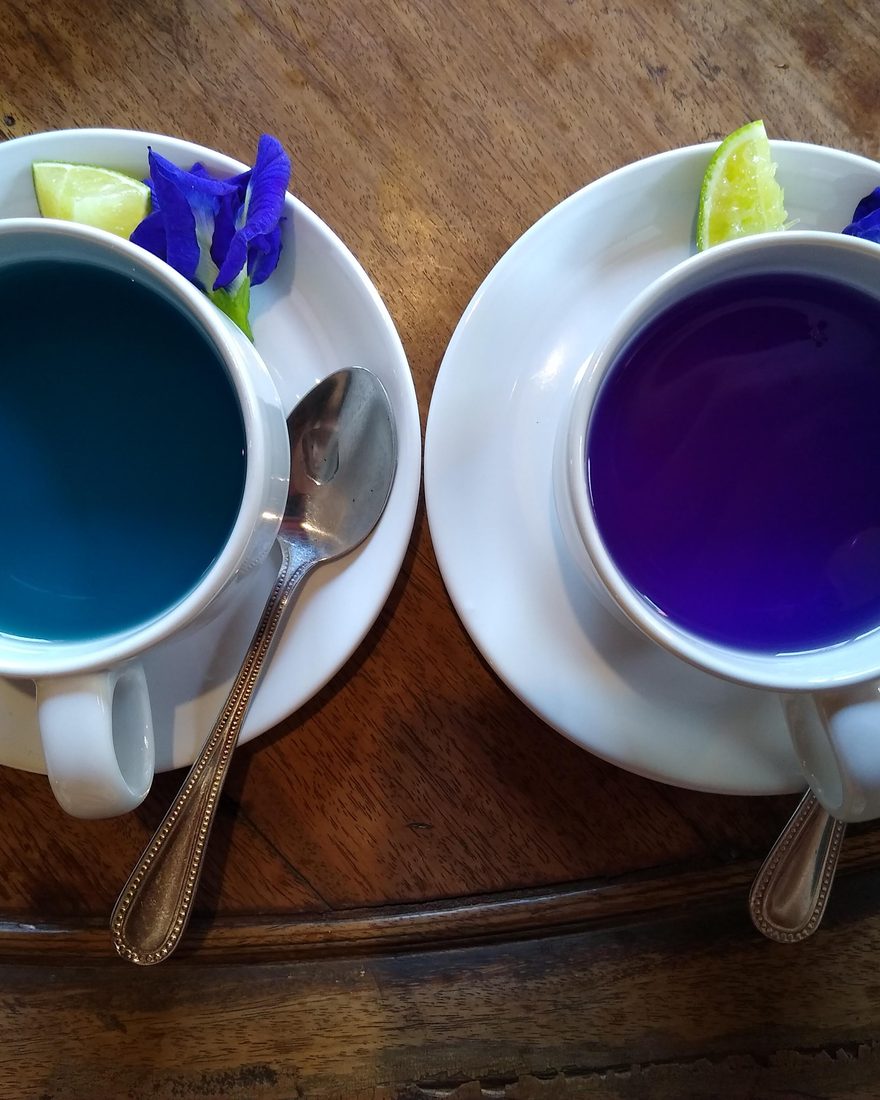
Whole dried blossoms of Clitoria ternatea, the butterfly pea — a climbing legume with a flower so deeply indigo it looks almost synthetic, though the color is entirely the plant's own anthocyanin pigment. Steeped in hot water, eight to ten flowers turn a cup a startling, ink- dark blue; a squeeze of lemon or lime shifts the same liquid through violet and into pink, the color answering directly to the acidity of whatever is added.
The flower has been drunk and eaten across Southeast Asia for generations, used in Thailand and Malaysia to dye rice, cakes, and drinks the same deep blue before it was ever bottled as a tea in its own right. It carries no caffeine and no relation to true tea, being simply a dried flower steeped like one — closer in spirit to a tisane than to camellia sinensis.
Steep eight to ten whole flowers in hot, not boiling, water for five minutes, then add citrus at the table and watch the color turn — best done in front of someone who hasn't seen it before.
Butterfly pea is traditionally valued as an antioxidant-rich, caffeine-free infusion, prized in its home region as much for its color as for anything else. This product is not intended to diagnose, treat, cure, or prevent any disease and is no substitute for medical advice.
Story preview
Tap to flip through the cover, snippets, and details.
 Butterfly Pea Blue Flower Tea