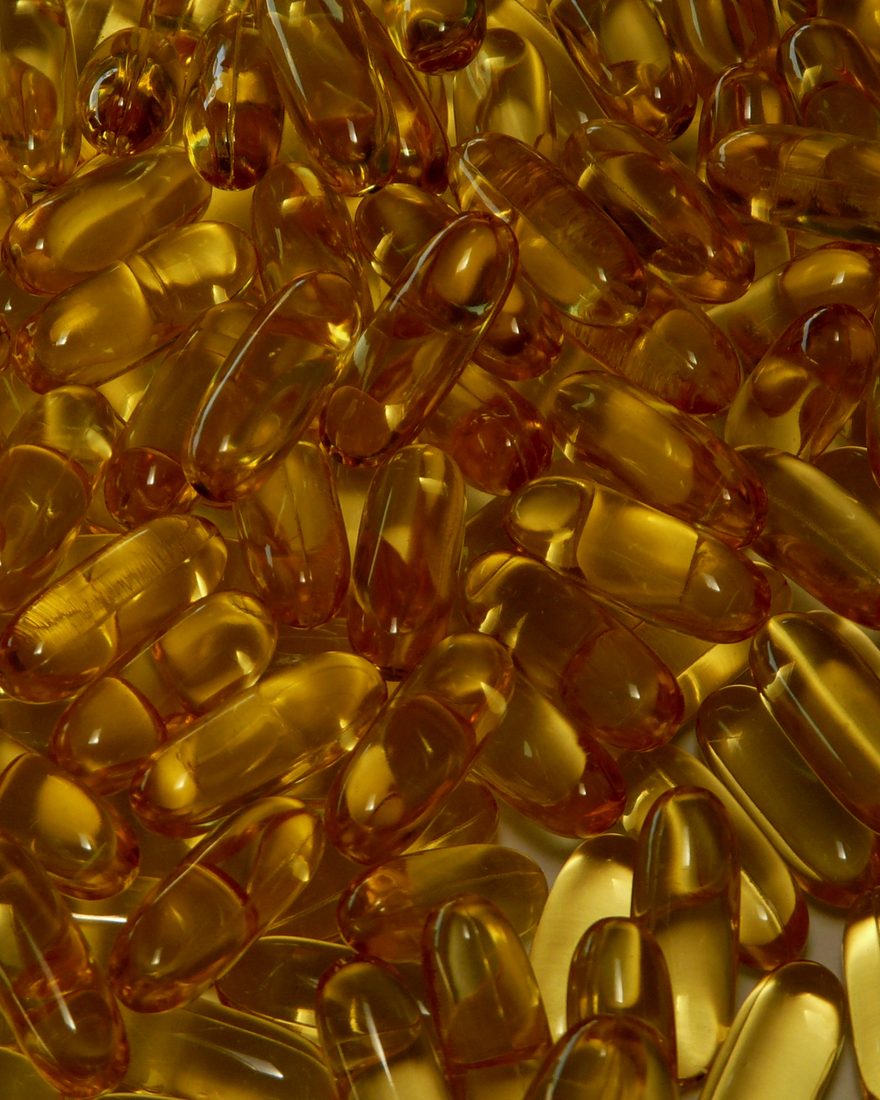
Barely larger than a caraway seed, this capsule holds a fine powder the color of old ivory. Folate takes its name from the Latin folium, leaf, after early chemists first drew it out of spinach in the last century — an unglamorous vegetable origin for a nutrient the body cannot make on its own.
It is long valued for its role in normal cell division and in the ordinary, everyday manufacture of red blood cells, work that never stops and asks for a steady supply rather than an occasional one. Every leafy green a body has ever eaten carried a little of it; this capsule simply keeps the reserve topped up.
This is methylfolate — 5-MTHF, in the trade's shorthand — the form folate takes after the liver has already converted it, rather than the folic acid found in fortified bread and cheap tablets, which the body must still process before it can use. A meaningful share of people convert that raw form poorly, so we start further down the road. Ours is produced through a slow fermentation process, closer to how a leaf would make it than how a factory would.
One capsule with breakfast, alongside the day's other quiet habits. Small, pale, easy to forget you've taken — which is rather the point of a vitamin meant to work in the background.