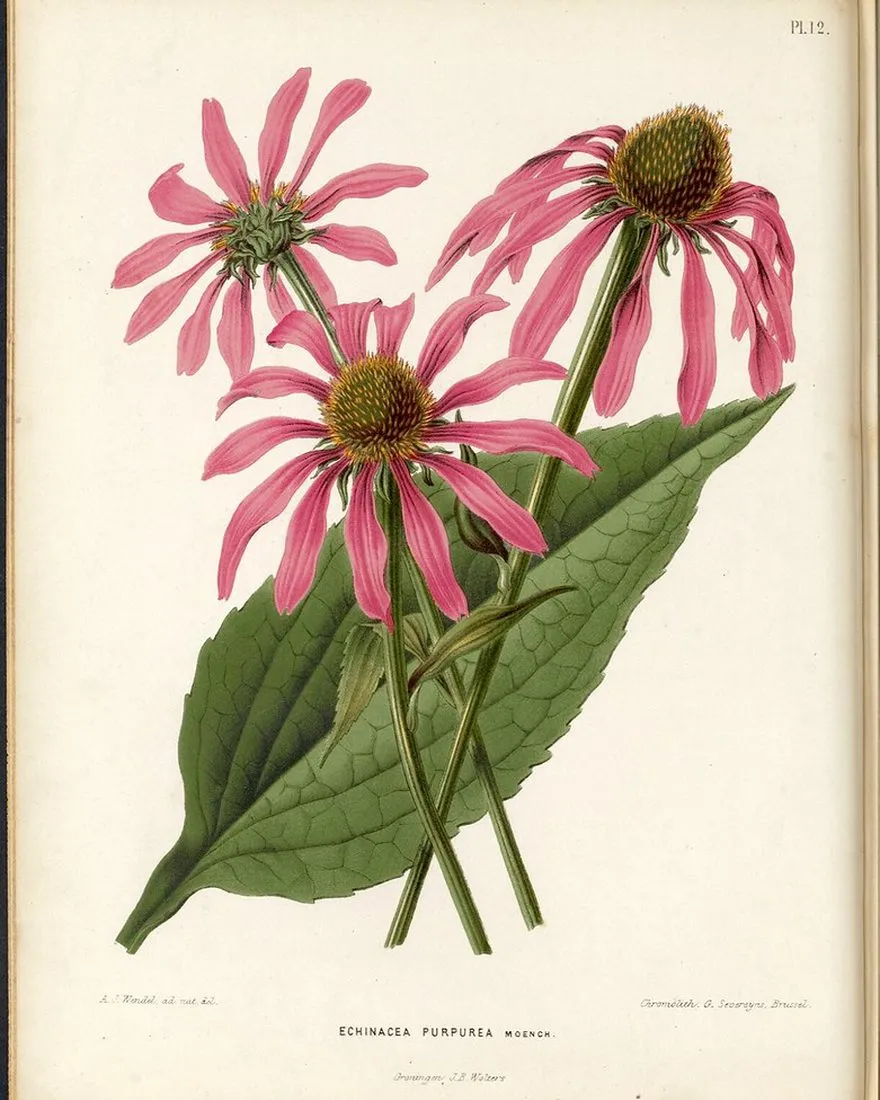
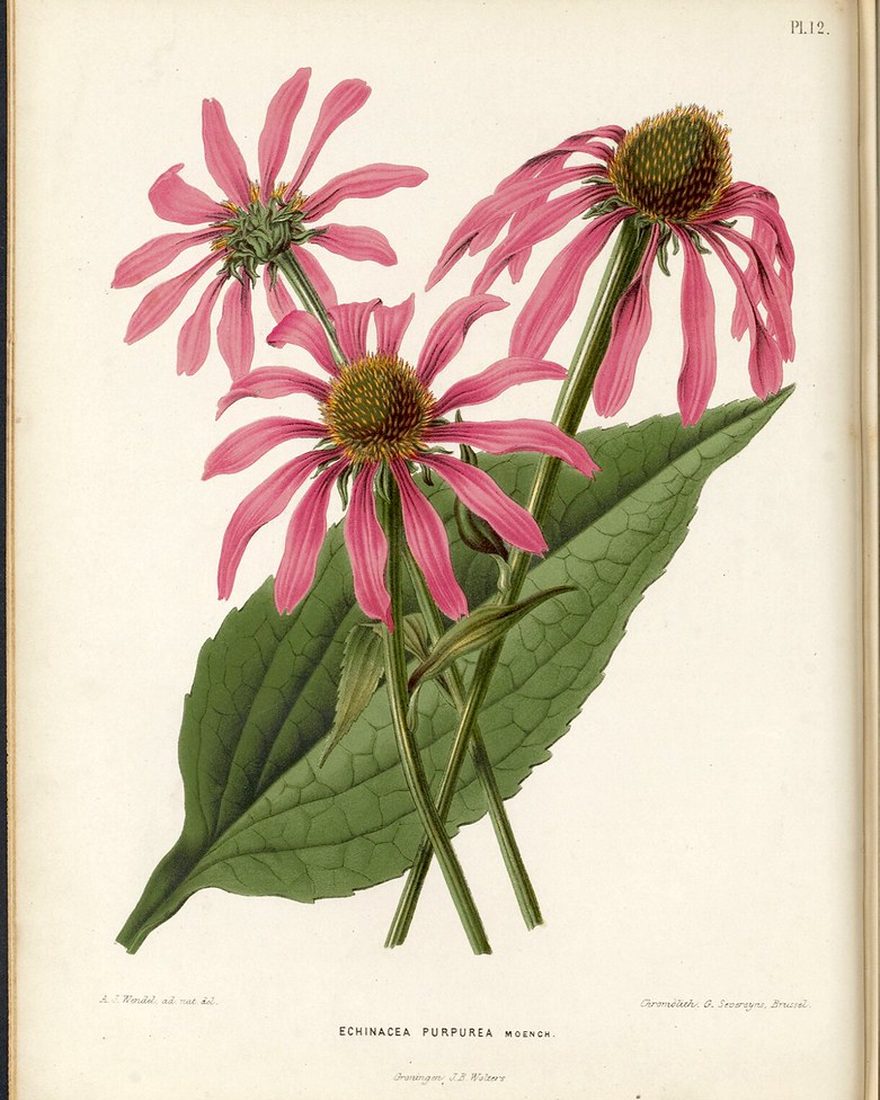
Echinacea purpurea is extracted here as the whole plant — root, leaf, and the tall purple daisy-head itself — steeped together so the finished tincture carries the plant's full range rather than one isolated part. Held on the tongue, it produces the faint tingling bite characteristic of a live, unadulterated extract, sharper than a leaf-only preparation, a small proof that nothing in the bottle has been cut or aged past its strength.
Echinacea grew wild across the American plains long before it entered the European herbal tradition, used by Indigenous peoples of the region for generations before European settlers adopted it into their own home remedies during the nineteenth century. It is traditionally taken at the first sign of a seasonal chill, to support the body's own defenses through the changeable days of a shifting season, rather than kept as a background daily tonic.
Two droppers, up to three times daily, taken as a short course rather than an ongoing habit — a handful of days at the first scratch in the throat or draft through the door, then set aside once the feeling passes and the season settles back into itself.
Echinacea is traditionally used to support the immune system; it does not treat, prevent, or cure illness, and it is not a substitute for medical advice.
Story preview
Tap to flip through the cover, snippets, and details.

 Echinacea Immune Drops